
Pilea Care and Best Tips


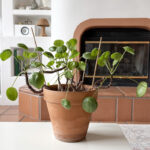

INSIDE : Love Chinese Money Plants? Discover simple Pilea care tips, easy propagation steps, and solutions for common leaf issues to keep your houseplant thriving!

This post may contain affiliate links. See full disclosure here.
This post has been updated since it’s original September 2018 publish date.
Move over Monsteras and Fiddle Leaf Figs, the Pilea is still one of the most fun and rewarding houseplants you can own!
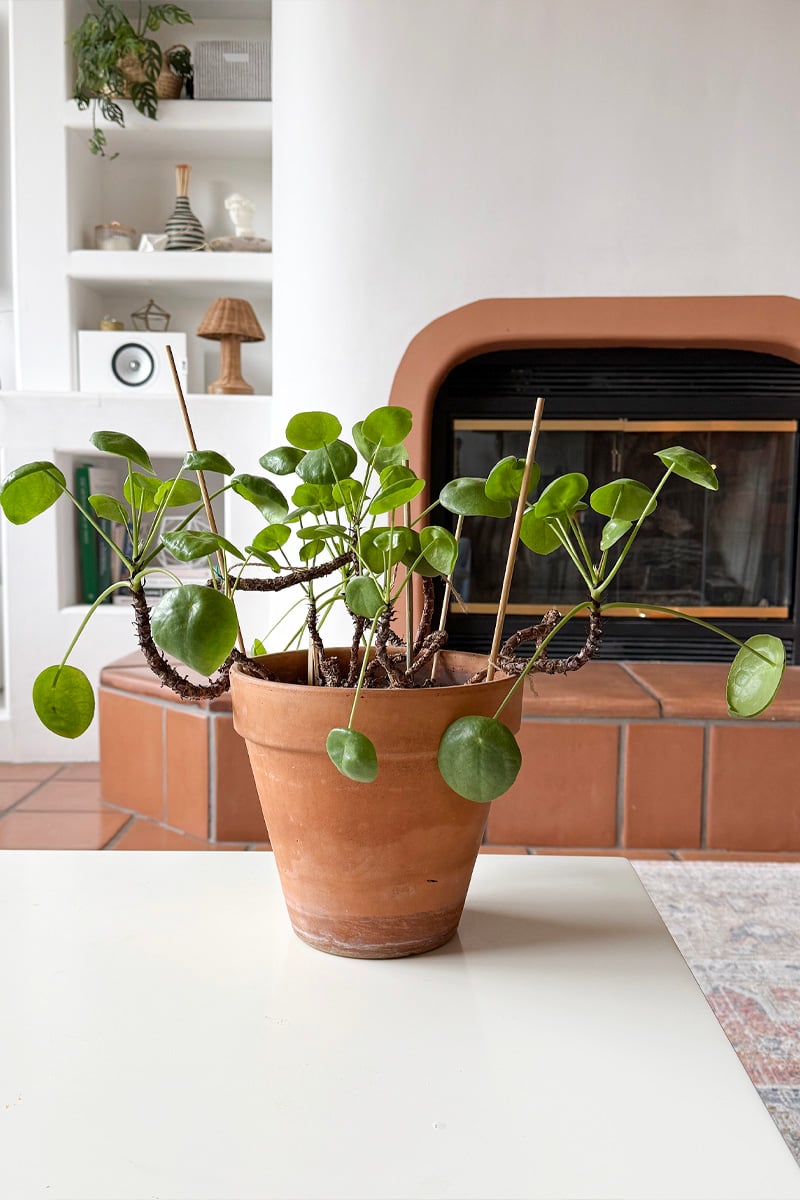
If you are a plant fanatic like me, you likely fell in love with the charming, coin-shaped leaves of the Pilea peperomioides years ago. I’ve had mine for over 8 years now and watching it grow from a small starter plant into a stunning, mature statement houseplant has been such fun.
Whether you just brought home a tiny starter or you’re looking for tips to help an established plant thrive, here is your ultimate guide to Pilea care, propagation and troubleshooting.
Are you a plant fanatic like me?? You might like some of my other Plant Care + Tip posts.
What is a Pilea Peperomioides?
This gorgeous plant goes by many fun nicknames, including the Chinese Money Plant, Pancake Plant, UFO Plant, or Missionary Plant. It is famous for its bright green, perfectly round leaves that stack up along a sturdy central stem.
How do you say Pilea Peperomioides?
Well, this gorgeous plants goes by many names, so you can call it Chinese Money Plant, Pancake plant, UFO plant, Missionary Plant or simply Pilea (that’s what I call mine). But in all seriousness, you pronounce it (Pie- Lee-uh Pepper–o–mee–oy-dees). And you can hear it’s pronunciation here.

Pilea Care and Best Tips: How to Grow a Thriving Chinese Money Plant
1. Light Requirements
Pileas love bright, indirect light but they don’t do well in direct sunlight. Be sure to keep them away from harsh, direct afternoon sun, which can scorch their delicate leaves.
Pro Tip: Because Pileas are incredibly responsive to the sun, they have a tendency to lean heavily toward the light source.
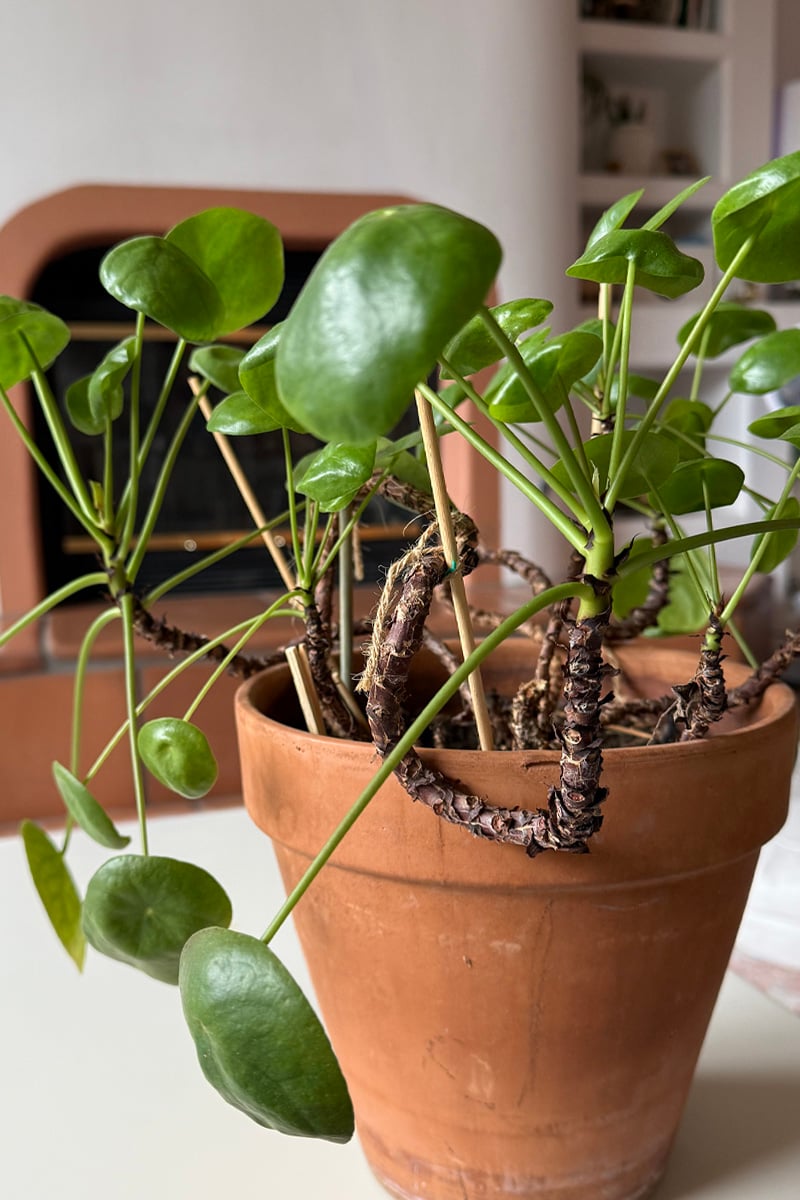
Give your pot a quarter-turn every time you water to keep your plant growing straight and balanced! After I water my plant each week, I rotate the plant a quarter turn to avoid a slanted stem. After your Pilea grows substantially you might need to even stake the main stem.
And although it can be kept outside in warmer areas, they seem to be best suited as houseplants in most locations.
2. Watering Schedule
How often to water Chinese Money plants is a great question. Pileas prefer soil that is kept slightly moist, but they hate sitting in soggy, standing water.
If you’re not sure whether it’s time to water yet, sticking your finger into the soil can help figure out what to do. The soil should have dried out a little but not entirely. If it’s bone dry or soaking wet, adjust your watering schedule accordingly!
Desert Living Tip: In drier climates, you may need to water a bit more frequently. If your Pilea leaves start drooping slightly, it’s usually a gentle reminder that it’s thirsty.

How to Propagate Pilea Pups
My plant is about 8 years old and he has been growing small pups for some time. I waited a while until they were of significant size (a few good inches tall) and decided it was time to propagate them.
A healthy Pilea should regularly produce these little pups. They pop up from the soil and are ready to use once they have a few leaves of their own.
The little pups should already have a small root system of their own, so all you have to do is cut the connection to the mother plant’s roots using a sharp, clean knife. Then, just pop them into smaller pots of their own and keep the soil lightly moist.
The move to their own pot might slightly shock the babies but because they already have a root system they usually immediately start growing. After about 4-6 weeks, they are anchored in their soil and will begin to sprout new leaves of their own.
Looking for more in depth info on How to Propagate Pilea? I wrote a post all about it.

Looking to gain insights, tips and methods for not only keeping your plants alive, but to have them thrive? Let’s grow green enthusiasts, one plant at a time together with my Happy Houseplants eBook!
Troubleshooting Common Pilea Issues
What are the white dots on the underside of my pilea leaf?
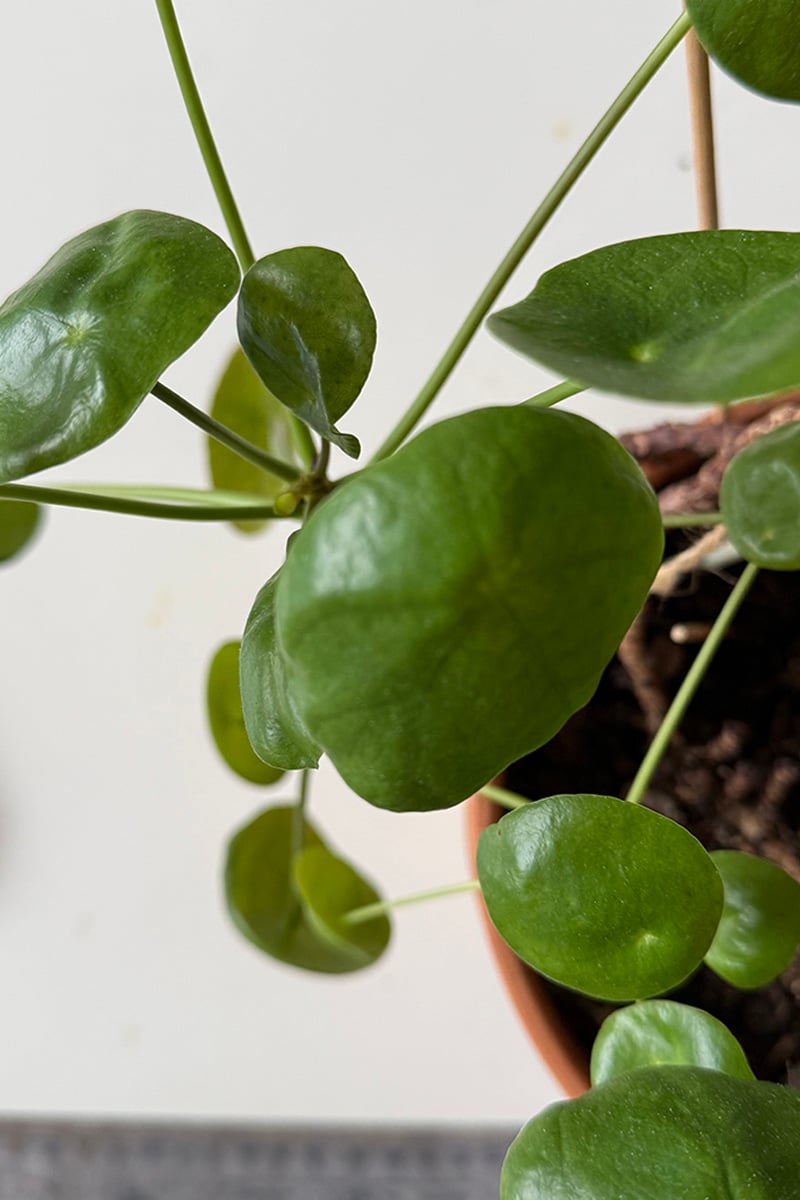
If you turn over your Pilea leaves after you have had your plant for a while, you will often notice small white dots all over the underside leaf. I was worried at first, but then realized it’s no big deal.
They have pores on the underside of their leaves which allow for gas exchange. Water vapor is released through these pores as well.
These white deposits are a sort of mineral deposit when the water vapor is released. I’ve heard of people using distilled water and they’re mostly gone. I however, just wipe the underside with a damp cloth every few weeks and keep using tap water.

Why are my Pilea leaves curling?
Curled leaves are usually a sign of overwatering or too much direct, intense light.
Try dialing back your watering schedule slightly and shifting the plant to a spot with softer, filtered light.
Where to buy Pilea?
While Pilea peperomioides used to be a rare “unicorn” plant, they are now much easier to find! I just noticed last week that my local Trader Joes was selling a few small Pilea plants and my local nursery has had them available a few times.
I think as they continue to gain popularity that more and more plant nurseries will be carrying them. I’ve seen numerous shops on Etsy carrying them (1, 2, 3). And I love that trusted sellers at Amazon are now selling them, too.

How fast do Pilea Peperomioides grow?
Under optimal indoor conditions, Pilea peperomioides is considered a fast-growing houseplant. During its active growing season in spring and summer, a healthy plant can easily produce new leaves weekly and grow anywhere from 6 to 12 inches in height in a single year. In fact, young Pileas placed in ideal environment settings will often double in size within their first twelve months.
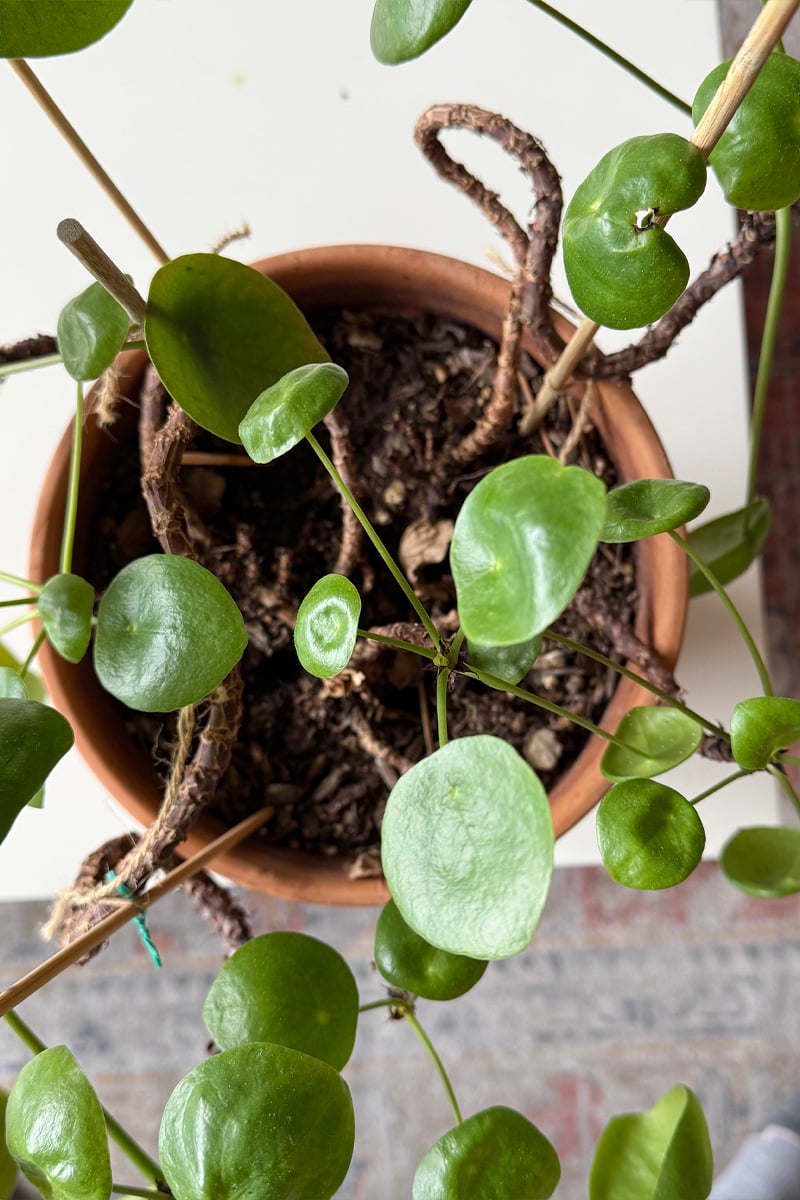
The primary driver of a Pilea’s growth speed is having bright, indirect sunlight and consistent care. Because they react quickly to light, you will notice the stem leaning rapidly toward the sun during warm months.
Once the plant reaches maturity—typically around 1 to 2 years old—it will also begin producing multiple offshoot “pups” in the soil and along the lower stem, expanding into a lush, full plant very quickly.

During the cooler, darker winter months, growth will naturally slow down or enter a brief dormant period. To keep growth steady and full during spring and summer, give your plant plenty of filtered light, rotate the pot regularly to keep the main stem straight, and offer a light dose of balanced houseplant fertilizer once or twice a month.
Looking for more creative plant related posts? You might want to check these out!
You might be interested in some of my mother Plant Care posts:
Looking for even more plant care? Check out some of these posts…

I’m so glad I found this site. My pilea were growing outside in pots and I brought them in and now I have well over a dozen pups. I have to repot soon. I’m not obligated to remove the pups, right? I can just repot them with their mama plant, right?
Hello! It sounds like your Pilea are doing wonderfully, good job. And yes, you are correct… you can leave the babies right in there with the mama!